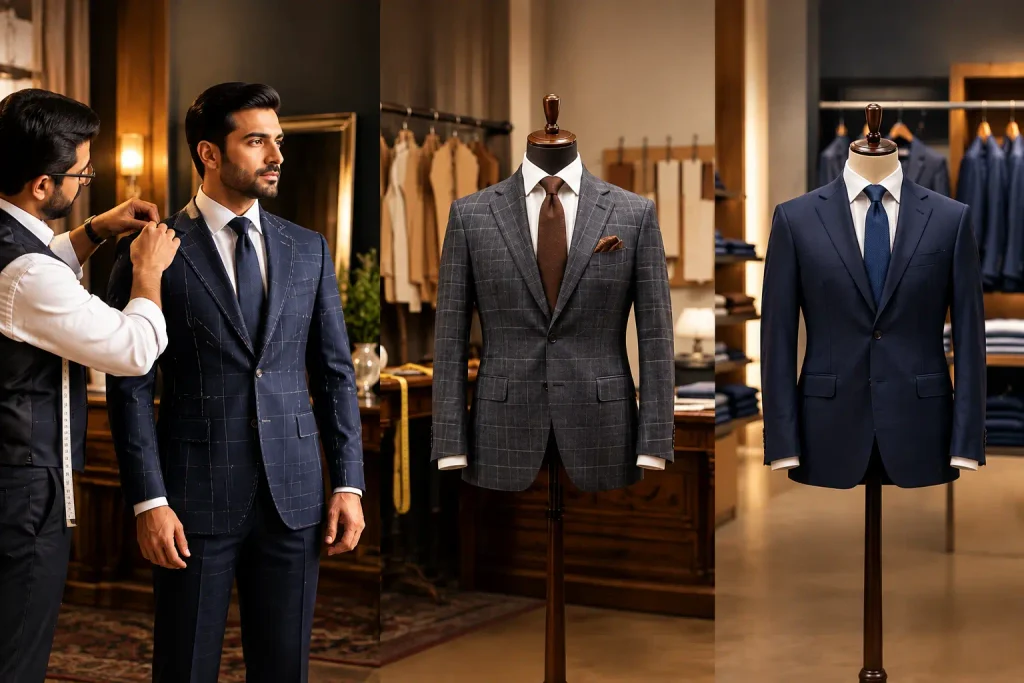
Choosing the right suit involves more than selecting a colour or finding your size. The way a suit is patterned, constructed, fitted and finished determines how it looks, feels and performs throughout the day. Whether you need a professional business suit, a wedding outfit or a versatile addition to your wardrobe, understanding the differences between bespoke tailoring, made-to-measure and ready-made suits will help you make a confident decision.
Bespoke tailoring in India is an excellent option for those who value personalised fit, fabric selection, craftsmanship and individual style. However, made-to-measure and ready-made suits also offer advantages depending on your budget, timeline and requirements.
At Eagle of Trinity, a bespoke tailoring house in Thrissur, Kerala, the focus is on creating garments around individual measurements, personal preferences and the occasion. With a tailoring heritage dating back to 1976, the brand serves customers across India and internationally through personalised tailoring services.
In this guide, we explain how the three approaches differ and how to choose the right one for you.
Quick Answer: What Is the Difference Between Bespoke, Made-to-Measure and Ready-Made Suits?
The main difference lies in how the suit is created and how much control you have over its fit and design.
- Bespoke suits: Created using an individual pattern developed specifically for the wearer, with a high level of personalisation and fitting refinement.
- Made-to-measure suits: Produced by adjusting an existing pattern to suit the customer’s measurements and selected design preferences.
- Ready-made suits: Manufactured in standard sizes and purchased as finished garments, sometimes with minor alterations.
If you want the greatest control over fit, fabric and design, bespoke tailoring is worth considering. Made-to-measure offers a middle ground between personalisation and convenience, while ready-made suits are useful when availability and affordability are the main priorities.est tier of tailoring because nothing about the process is generic — from the very first pencil mark on paper.
1. What Is Bespoke Tailoring?
Bespoke tailoring is a personalised approach to garment making in which a suit is designed around an individual’s measurements, proportions, preferences and intended use.
Rather than simply selecting a standard size or modifying a generic pattern, the tailor develops an individual pattern for the customer. This allows greater scope to account for details such as shoulder slope, posture, chest shape, waist proportions, arm length and preferred silhouette.
The objective is not merely to make the suit fit. It is to create a garment that feels comfortable, complements the wearer and reflects their personal style.
How Does Bespoke Tailoring Work?
A typical bespoke tailoring journey involves several stages.
1. Personal consultation
The process begins with a discussion about the occasion, preferred style, lifestyle and expectations. A business suit, wedding suit and evening suit may require different fabrics, cuts and finishing details.
2. Detailed measurements
The tailor assesses body proportions and measurements to understand how the garment should sit and move. Depending on the service, posture and individual fit preferences may also be considered.
3. Fabric and design selection
The customer selects a suitable fabric, colour, pattern and design details. Lapels, pockets, buttons, linings, vents and trouser styling can be discussed according to the tailoring service offered.
4. Individual pattern development
A pattern is created specifically for the customer rather than relying solely on a standard-size template. This is one of the defining differences between true bespoke tailoring and made-to-measure.
5. Construction and fittings
The garment is constructed and assessed through the appropriate fitting stages. Adjustments can refine the balance, drape, comfort and overall appearance.
6. Final finishing
The finished suit undergoes final adjustments and inspection before delivery.
The exact process, number of fittings and construction methods vary between tailoring houses. When commissioning a suit, ask the tailor to explain what is included.
Who Should Choose Bespoke Tailoring?
Bespoke tailoring may be particularly suitable for:
- Professionals who wear suits regularly for meetings and business events.
- Grooms seeking personalised wedding attire.
- Customers whose proportions do not fit standard sizing comfortably.
- Individuals who have specific preferences for jacket length, trouser rise or overall silhouette.
- Customers who appreciate fabric choice, craftsmanship and detailed personalisation.
For customers looking for bespoke tailoring in India, a reputable tailor can help balance traditional craftsmanship with contemporary styling and practical comfort.
2. What Is Made-to-Measure Tailoring?
Made-to-measure tailoring begins with an existing pattern that is adjusted to accommodate the customer’s measurements. It offers more personalisation than purchasing a standard-size suit, without necessarily involving the complete pattern-making process associated with bespoke tailoring.
The customer usually provides measurements and selects from the available fabrics, colours and design options. The manufacturer or tailor then modifies the base pattern and produces the garment.
How Does Made-to-Measure Work?
The process generally includes:
- Taking measurements such as chest, waist, sleeve length and trouser length.
- Selecting a base pattern that is reasonably close to the customer’s proportions.
- Choosing available fabrics and design options.
- Adjusting the pattern and constructing the suit.
- Checking the fit and making any alterations included in the service.
The amount of personalisation depends on the provider. Some made-to-measure services offer extensive fabric and design choices, while others use a more limited selection.
Advantages of Made-to-Measure Suits
Made-to-measure can be a practical option for people who want a more personalised fit without commissioning a fully bespoke garment.
Its advantages include:
- A fit adjusted to individual measurements.
- A choice of fabrics and selected design details.
- Potentially fewer fitting stages.
- A useful balance between customisation and convenience.
- Suitability for professionals building a formal wardrobe.
However, because the process starts with an existing pattern, some adjustments may be limited by that pattern’s underlying structure.
Who Should Choose Made-to-Measure?
Consider made-to-measure if you want a suit that is more personalised than standard ready-to-wear clothing, but you do not require the full bespoke process.
It can be particularly useful for office wear, regular business travel and customers who prefer a streamlined ordering experience.
3. What Are Ready-Made Suits?
Ready-made suits, also known as ready-to-wear or off-the-rack suits, are manufactured in standard sizes before the customer purchases them.
You select the closest available size, try the suit on and decide whether it meets your needs. Depending on the garment, a tailor may be able to adjust the trouser length, sleeve length or waist.
Advantages of Ready-Made Suits
Ready-made suits offer several practical benefits:
- Immediate availability in many retail stores.
- A wide range of styles and price points.
- Convenience for last-minute occasions.
- No need to wait for the garment to be produced.
- The possibility of improving fit through suitable alterations.
For someone attending an event at short notice, a well-chosen ready-made suit can be a sensible solution.
Limitations of Ready-Made Suits
The main limitation is that the garment is designed around standard sizing rather than your individual proportions.
A jacket might fit comfortably across the chest but feel too loose around the waist. The shoulders may sit incorrectly, or the trouser rise may not provide the comfort you prefer.
Minor alterations can improve the fit, but significant structural changes may be difficult, costly or impractical.
Ready-made suits are not necessarily low quality. Premium ready-to-wear garments can use excellent fabrics and construction techniques. The distinction is that the garment was not originally patterned specifically for you.
4. Bespoke vs Made-to-Measure vs Ready-Made Suits: Key Differences
The following comparison highlights the main factors to consider before purchasing your next suit.
| Feature | Bespoke | Made-to-measure | Ready-made |
| Starting point | Individual pattern | Adjusted existing pattern | Standard-size garment |
| Fit | Highly personalised | Adjusted to measurements | Based on standard sizing |
| Pattern development | Created for the individual | Existing pattern modified | Standard production pattern |
| Fabric selection | Depends on the tailor’s collection | Depends on the available range | Limited to available stock |
| Style customisation | Extensive, depending on the service | Selected options | Usually limited |
| Fittings | May involve multiple fittings | Often fewer fittings | Try-on and optional alterations |
| Availability | Requires production time | Requires production time | Often available immediately |
| Price | Generally the highest | Generally mid-range | Wide range of prices |
| Best suited for | Personalised fit and design | Customisation with convenience | Speed and convenience |
Important: These are general distinctions, not guarantees of quality. Construction, fabric, workmanship and service vary between providers. A well-constructed made-to-measure suit may outperform a poorly made bespoke suit.
5. How Does Fit Differ Between the Three Options?
Fit is one of the most noticeable differences when comparing bespoke, made-to-measure and ready-made suits.
A good suit should allow comfortable movement while maintaining a balanced silhouette. The shoulders should sit correctly, the jacket should fall naturally, the sleeves should be proportionate and the trousers should provide adequate room for sitting and walking.
Bespoke Fit
A bespoke pattern can account for individual proportions and posture in greater detail. This is valuable for customers who find standard sizing restrictive or want more control over how the garment drapes.
Made-to-Measure Fit
Made-to-measure improves the fit by modifying an existing pattern. It can provide excellent results when the base pattern is suitable for the customer’s proportions and the available adjustments are sufficient.
Ready-Made Fit
Ready-made suits rely on standard sizing. Customers may find an excellent fit straight from the rack, while others may need alterations or have to compromise on certain proportions.
When assessing fit, pay particular attention to the shoulders, chest, collar, jacket length, sleeve length, waist and trouser rise. Comfort matters as much as appearance.
6. Suit Construction: What Should You Know?
The construction of a suit affects its shape, drape, comfort and long-term performance. However, construction quality cannot be determined by the label alone.
Fused Construction
Fused jackets use an adhesive-bonded interlining to support the outer fabric. This approach is common in ready-to-wear suits and can produce a neat, structured appearance at an accessible price.
Quality varies with the materials and manufacturing process.
Half-Canvas Construction
Half-canvas jackets incorporate a canvas layer through the upper front and chest area. This can help the jacket develop a natural shape while maintaining structure.
Full-Canvas Construction
Full-canvas jackets use a canvas layer extending through more of the jacket front. When well executed, this construction can provide natural drape and may adapt to the wearer over time.
Not every bespoke suit is necessarily full canvas, and not every ready-made suit is fused. These construction methods are separate from the pattern-making distinction between bespoke and made-to-measure.
Before commissioning a suit, ask about the interlining, canvas construction, stitching and finishing methods. Understanding these details helps you compare garments on more than appearance alone.
7. Fabric Selection: Which Option Gives You More Choice?
Fabric influences the suit’s appearance, comfort, drape and suitability for different occasions.
The right material depends on the climate, the intended use, how frequently you will wear the garment and the look you want to achieve.
Wool
Wool is a versatile choice for business suits, formal occasions and year-round wardrobes. Different weaves and fabric weights can provide different levels of structure, texture and warmth.
Linen
Linen is popular for warm-weather dressing because of its light feel and breathable nature. It wrinkles more readily than many other suiting fabrics, which is part of its natural character.
Cotton
Cotton suits can offer a relaxed yet polished appearance. They are often suitable for smart-casual events and less formal business settings.
Wool Blends and Other Luxury Fabrics
Blended fabrics can offer different combinations of drape, durability, texture and ease of care. Silk and other premium materials may also be suitable for particular garments or occasions.
Which Tailoring Option Offers the Best Fabric Choice?
Bespoke tailoring may provide access to a wider range of fabric books and more personalised recommendations. Made-to-measure services may also offer substantial choice, depending on their suppliers. Ready-made suits are restricted to the fabrics used in the available collections.
For customers in India or the UAE, climate should be part of the decision. Lightweight, breathable fabrics may be preferable for hot conditions, while heavier materials may suit cooler environments or air-conditioned settings.
Eagle of Trinity offers fabric-related tailoring services and guidance to help customers choose materials suited to their garments and preferences.
8. How Much Customisation Can You Expect?
Customisation allows you to create a suit that reflects your personal style rather than simply following the details of an existing garment.
Depending on the service, the options may include:
- Lapel width and style.
- Jacket length and silhouette.
- Single-breasted or double-breasted designs.
- Button styles and placement.
- Pocket shapes and positions.
- Lining colours and patterns.
- Trouser rise, pleats and leg shape.
- Cuff and finishing details.
- Monogramming, where available.
Bespoke tailoring generally provides the greatest scope for individual design decisions. Made-to-measure offers selected customisation within the provider’s system. Ready-made suits usually provide the least flexibility, although alterations can improve certain aspects.
The key is to distinguish between design choices and structural changes. Selecting a different lining is not the same as creating a completely new pattern for your body.
9. Which Suit Is Best for Weddings, Business and Special Occasions?
Your intended use should influence the tailoring option you choose.
Wedding Suits
A wedding suit needs to complement the occasion, the venue, the season and your personal style. Bespoke tailoring can be valuable when you want a specific silhouette, coordinated details or a garment designed around your proportions.
Start planning early enough to allow for consultations, fabric selection, production and fittings.
Business and Corporate Wear
Professionals who wear suits frequently may benefit from a consistent fit and a wardrobe built around versatile colours and fabrics.
Bespoke tailoring can help establish a distinctive personal style. Made-to-measure may suit professionals who need a personalised fit with a more streamlined process, while ready-made suits can be useful for occasional meetings.
Formal Events and Evening Wear
For formal dinners, receptions and special events, consider the dress code before selecting a suit. The fabric, colour, lapels and accessories should work together rather than compete for attention.
Everyday Smart Dressing
If you only wear a suit occasionally, ready-made clothing or made-to-measure may meet your needs. If you wear tailored clothing regularly and value individual fit, investing in bespoke pieces may be worth considering.
10. Is Bespoke Tailoring Worth the Investment?
The value of bespoke tailoring depends on your priorities, how often you wear suits and the quality of the garment you commission.
A bespoke suit generally requires more individual work than a standard-size garment. That additional work can provide greater control over fit, design, fabric and fitting refinements.
For someone who wears a suit regularly, comfort and versatility may justify the additional investment. For someone who needs a single suit immediately, a quality ready-made option may be more practical.
When comparing prices, look beyond the initial cost. Ask what is included in the service, which fabrics are available, what construction methods are used, how fittings are handled and whether future alterations are possible.
A higher price does not automatically guarantee better quality. The value comes from the combination of materials, workmanship, fit and service.
11. Why Consider Eagle of Trinity for Bespoke Tailoring in India?
Eagle of Trinity is a bespoke tailoring house based in Peramangalam, Thrissur, Kerala, with a heritage dating back to 1976.
The brand creates personalised garments for customers seeking tailored clothing for business, weddings, formal events and individual wardrobes.
Its tailoring services include:
- Bespoke suits, blazers and formal wear.
- Business shirts and trousers.
- Wedding suits and groom attire.
- Personalised fabric selection.
- Measurement and fitting guidance.
- Online consultations for customers outside Kerala.
- International tailoring services and worldwide delivery.
The process begins with understanding your requirements, preferred style and intended occasion. Fabric and design choices can then be discussed before the garment is created and refined through the relevant stages of tailoring.
Whether you are based in Kerala, elsewhere in India or overseas, the available online tailoring service provides a way to discuss your requirements remotely.
Explore Eagle of Trinity’s bespoke tailoring services to learn more about its tailoring options. International customers can also explore the international bespoke tailoring service.
12. How to Choose the Right Tailoring Option
Before making a decision, consider these five questions:
1. How important is fit to you?
If standard sizing consistently creates problems, bespoke or made-to-measure may be worth exploring.
2. How quickly do you need the suit?
Ready-made suits are generally the fastest option. Custom garments require time for production and any necessary fittings.
3. How much personalisation do you want?
If you want control over the garment’s pattern, proportions and design, discuss the available bespoke process with your tailor.
4. What is your budget?
Decide what you are comfortable investing, then compare fabric, construction, fitting services and finishing rather than price alone.
5. How often will you wear it?
A frequently worn business suit may justify more attention to fit and versatility than a suit intended for a single event.
The right choice is the one that meets your practical needs without compromising the qualities that matter most to you.
Frequently Asked Questions
1. What is the difference between bespoke tailoring and made-to-measure?
Bespoke tailoring involves creating an individual pattern for the customer, while made-to-measure starts with an existing pattern that is modified to accommodate their measurements. Bespoke generally offers greater scope for individual pattern development and fitting refinement.
2. Is bespoke tailoring better than ready-made suits?
Bespoke tailoring offers greater personalisation and can provide a more precise fit for individual proportions. However, quality ready-made suits can also be excellent choices, especially when standard sizing fits well or the garment is needed quickly.
3. Is made-to-measure cheaper than bespoke tailoring?
Made-to-measure is generally less expensive than full bespoke tailoring because it uses an existing pattern and often involves a more streamlined production process. Actual prices depend on the tailor, fabric, construction and service.
4. Can a ready-made suit be altered to fit perfectly?
A tailor can often improve the fit of a ready-made suit through alterations such as hemming trousers or adjusting the waist and sleeves. Major changes to the shoulders, balance or overall structure may be difficult or uneconomical.
5. Which fabric is best for a suit in India?
Wool, linen, cotton and suitable blends can all work well, depending on the climate, occasion and desired appearance. Lightweight, breathable fabrics are often practical in warmer regions, but the fabric’s weave and weight matter as well.
6. How long does bespoke tailoring take?
The timeline depends on the garment, fabric availability, construction method and number of fittings required. Discuss the expected schedule with your tailor, particularly if you are preparing for a wedding or another fixed-date event.
7. Can I order bespoke tailoring from outside India?
Yes, some tailoring houses offer remote consultations, measurement guidance and international delivery. Eagle of Trinity provides an international tailoring service for customers who cannot visit its Thrissur studio in person.
8. Is bespoke tailoring suitable for wedding suits?
Yes. Bespoke tailoring can be useful for wedding suits because it allows the customer to personalise the fit, fabric and design details. Planning early gives sufficient time for consultations and fittings.
9. What should I ask a tailor before ordering a bespoke suit?
Ask how the pattern is created, which fabrics are available, what construction methods are used, how many fittings are included, what alterations are possible and how long production is expected to take.
10. Where can I find bespoke tailoring in India?
Look for a tailor with a clear process, relevant experience, transparent information about fabrics and construction, and examples of their work. Eagle of Trinity, based in Thrissur, Kerala, offers bespoke tailoring services for customers in India and internationally.
Conclusion
suits prioritise convenience, made-to-measure offers a balance of fit and customisation, and bespoke tailoring provides a more individual approach to pattern development, design and fitting.
Before choosing, consider your budget, deadline, preferred style and expectations for comfort. Understanding these differences will help you invest in a suit that works for your lifestyle and the occasions that matter to you.
If you are exploring bespoke tailoring in India, Eagle of Trinity can help you discuss fabric choices, garment styles and personalised tailoring requirements.
Ready to create a suit that reflects your style?
Visit Eagle of Trinity’s bespoke tailoring services or book a consultation to begin your tailoring journey.